EV Battery: Technology, Types, Lifecycle & Future
An EV battery is the core of every electric vehicle, powering the motor and controlling range, performance, and charging speed. Modern EVs use advanced lithium-ion battery systems with a Battery Management System to ensure safe and efficient operation.
In this guide, you will learn how EV batteries work, their types, lifespan, cost, and common problems, explained in a simple and practical way based on real-world experience.

How Do EV Batteries Work?
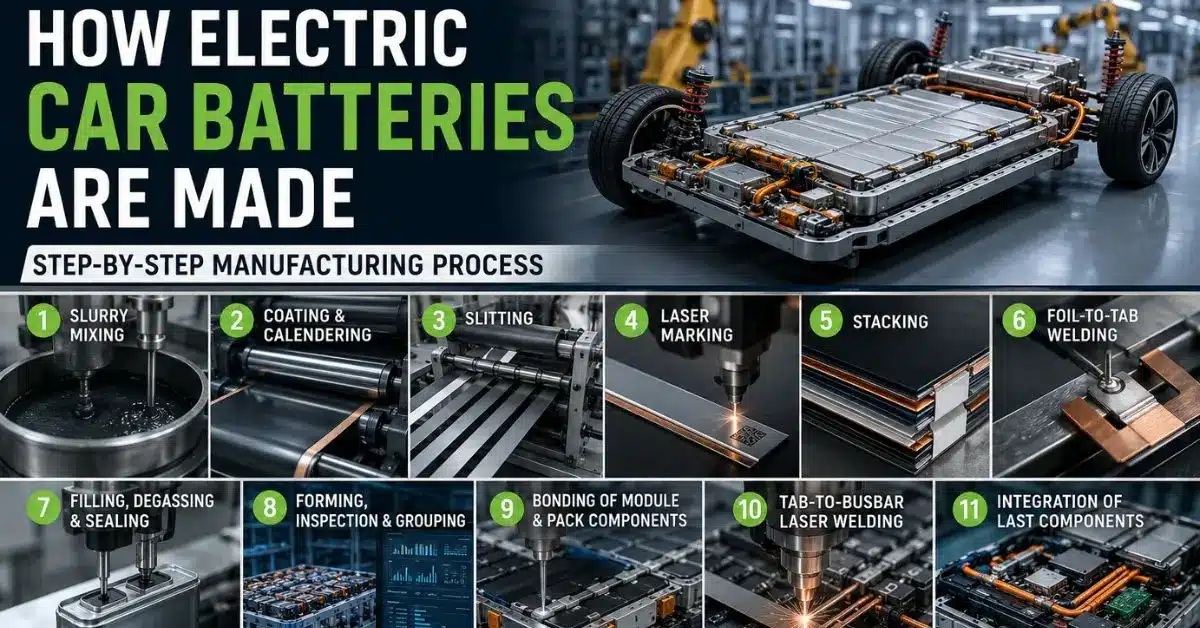
An electric vehicle battery pack is made up of thousands of individual cells. These cells are grouped into modules, and the modules are assembled into the full battery pack that sits underneath your car’s floor.
Each cell works through a basic electrochemical reaction. When you charge your EV, lithium ions move from the cathode to the anode and get stored there. When you drive, those ions flow back, and that movement generates the electrical current that powers your motor.
Four main components make this work:
- Anode (negative electrode) — usually made of graphite, stores lithium ions during charging.
- Cathode (positive electrode) — made of a lithium metal compound, releases ions when you drive.
- Electrolyte — the liquid or gel medium that lets ions move between electrodes.
- Separator — a thin barrier that keeps the anode and cathode from touching directly.
Sitting on top of all this chemistry is the Battery Management System, or BMS. The BMS is the brain of your battery pack. It monitors temperature, voltage, and state of charge in real time. It prevents overcharging, manages heat, and makes sure every cell in the pack charges and discharges evenly.
Types of EV Batteries
Not all EV batteries use the same chemistry. The type of battery in your car affects range, lifespan, charging speed, safety, and replacement cost. Here are the main types you’ll find in US electric vehicles today.
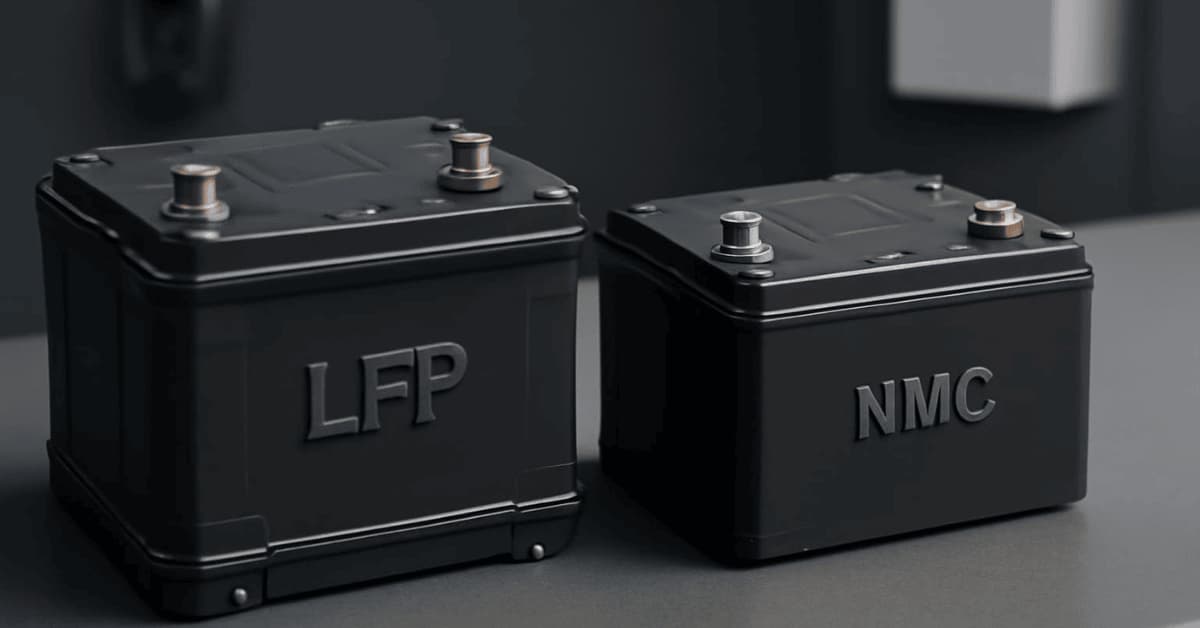
1. NMC — Nickel Manganese Cobalt
NMC is the most common chemistry in US EVs. You’ll find it in Tesla Model S and X, Kia EV6, Hyundai IONIQ 5, BMW i4, and many others. NMC batteries have high energy density, meaning they store a lot of power for their size. That gives you a longer range.
Typical lifespan is 1,500 to 5,000 charge cycles. The downside is that they require careful thermal management and cobalt, which is an expensive material.
2. LFP — Lithium Iron Phosphate
LFP chemistry is used in Tesla Model 3 and Model Y Standard Range, BYD vehicles, and many commercial EVs. LFP batteries are safer, cheaper to produce, and can last 3,000 to 7,000 cycles. Their main limitation is slightly lower energy density compared to NMC, which means less range per pound of battery.
One major advantage for US owners: LFP batteries can be charged to 100% daily without the same degradation risk as NMC. Tesla even recommends this for their LFP-equipped cars.
3. NCA — Nickel Cobalt Aluminum
NCA is used in older Tesla vehicles, particularly those with Panasonic 2170 cells. It offers very high energy density but requires strict temperature management. You won’t find it in many new models as manufacturers move toward NMC and LFP.
Solid-State (Coming Soon)
Solid-state batteries replace the liquid electrolyte with a solid material. This makes them safer, potentially faster charging, and capable of higher energy density. Toyota and several US manufacturers are targeting commercial production in the 2027–2030 window. They are not yet available in production vehicles in the US market.
EV Battery Type Comparison
|
Type |
Range |
Lifespan (cycles) |
Safety |
Used In |
|---|---|---|---|---|
|
NMC |
High |
1,500–5,000 |
Moderate |
Tesla Model S/X, Kia EV6, BMW i4 |
|
LFP |
Moderate |
3,000–7,000 |
High |
Tesla Model 3/Y (Standard Range), BYD |
|
NCA |
Very High |
1,000–3,000 |
Moderate |
Older Tesla models |
|
Solid-State |
Very High |
2,000+ (projected) |
Very High |
Not yet in production |
How Long Does an EV Battery Last?
The federal government requires all EV manufacturers selling in the US to warranty their batteries for at least 8 years or 100,000 miles. California and several other states extend this to 10 years or 150,000 miles under their stricter emissions rules.
Real-world data from US owners and independent research shows the following:
- Tesla Model 3 and Model Y: Most vehicles retain over 90% capacity at 100,000 miles.
- Nissan Leaf: Older models (2011–2017) without active thermal management degrade faster — some show 70–75% capacity at 80,000 miles.
- Chevy Bolt: Generally strong retention, with most showing 85–90% capacity at 100,000 miles.
- Most modern EVs: Designed to retain at least 70–80% capacity at 8 years / 100,000 miles (federal minimum warranty requirement).
What Causes EV Battery Degradation?
Battery degradation is normal. Every charge cycle slowly reduces the battery’s ability to hold a full charge. But the rate of degradation varies significantly based on how you use and charge your vehicle.
The biggest factors that accelerate degradation in US conditions:
Frequent DC Fast Charging (Level 3)
Superchargers and other DC fast chargers push large amounts of current into the battery very quickly. This generates heat and causes more stress on the cells than slower home charging. Occasional fast charging is fine — using it as your primary charging method every day will shorten battery life.
Extreme Temperatures
Heat is the enemy of lithium-ion batteries. Parking your EV outside in Phoenix summers or regularly charging in high ambient temperatures degrades cells faster. Cold weather temporarily reduces range but causes less permanent damage than sustained heat. US owners in southern states should pay extra attention to this.
Keeping Battery at 100% or 0% for Extended Periods
Lithium-ion chemistry is most stable in the 20–80% range. Consistently charging to 100% and leaving the car parked for days accelerates cathode degradation. Most EV manufacturers now include daily charge limit settings — setting this to 80% for everyday use is one of the easiest ways to extend battery life.
How to Charge Your EV Battery Correctly
Charging habits make a bigger difference to long-term battery health than most EV owners realize. Here is what the data and manufacturer guidelines suggest for US drivers.
Level 1 Charging (120V — Standard Wall Outlet)
The slowest option. Adds roughly 3–5 miles of range per hour. Not practical as a primary charging method for most people, but it works for plug-in hybrids or low-mileage drivers.
Level 2 Charging (240V — Home Charger)
This is what the majority of US EV owners should use as their primary charging method. A Level 2 EVSE (Electric Vehicle Supply Equipment) installed at home adds 20–30 miles of range per hour. Charging overnight from 20% to 80% is the ideal daily routine for battery longevity.
Level 3 / DC Fast Charging
Use on road trips and when you need a quick top-up. Tesla Superchargers (V3) can add 200 miles in about 15 minutes. Avoid making this your daily charging routine. Most manufacturers recommend limiting DC fast charging to once or twice per week for optimal battery health.
Smart Charging Tips for US Owners
- Set your daily charge limit to 80% for routine use — only charge to 100% before long road trips.
- Plug in when you get home rather than waiting until the battery is nearly empty.
- Pre-condition your battery before fast charging in cold weather — most EVs let you do this through the app.
- If parking at an airport or anywhere for more than 3 days, charge to 50% rather than the full rate.
EV Battery Cost and Warranty in the US
Battery cost is the primary reason EVs still have a higher upfront price than comparable gas vehicles. Understanding the cost structure helps you evaluate the true cost of EV ownership.
Battery Pack Cost in 2025
As of 2025, battery pack costs in the US range from approximately $100 to $150 per kWh at the manufacturer level. For a typical 75 kWh battery pack, that translates to $7,500 to $11,000 in raw battery cost — though retail replacement prices are significantly higher once you add labor and dealer markup.
EV Battery Replacement Costs by Model
| Vehicle | Battery Size | Estimated Cost (USD) |
|---|---|---|
| Tesla Model 3 | 75 kWh | $13,000 – $16,000 |
| Nissan Leaf | 40 kWh | $8,500 – $12,000 |
| Chevy Bolt | 65 kWh | $9,000 – $14,000 |
| Tesla Model S | 100 kWh | $15,000 – $20,000+ |
| Ford F-150 Lightning | 98–131 kWh | $15,000 – $22,000 (estimated) |
Federal Warranty Requirements
All EVs sold in the US are legally required to carry a minimum 8-year / 100,000-mile warranty on the battery and electric drive components. In California (and states that follow California’s standards), the requirement extends to 10 years / 150,000 miles. The warranty must cover battery replacement if capacity drops below 70% of original.
When Does an EV Battery Need Replacing?
Most EV batteries will outlast the vehicle’s useful life with normal use. But there are clear signs that replacement may be necessary before the natural end of battery life.
Signs Your EV Battery May Need Attention
- Range has dropped more than 30% compared to when the car was new
- Charging to 100% takes significantly longer than it used to
- Battery percentage drops faster than normal during driving
- Warning lights or battery health alerts in the vehicle dashboard
- Battery will not charge above 80% even when limit is set to 100%
How to Check EV Battery Health
Most modern EVs display battery health data through the in-car screen or companion app. For a more detailed assessment, third-party tools like Recurrent (for US consumers) provide data-driven battery health reports based on your actual charging and driving history. Dealerships can also run a full battery diagnostic using manufacturer tools.
EV Battery Safety — What US Owners Should Know
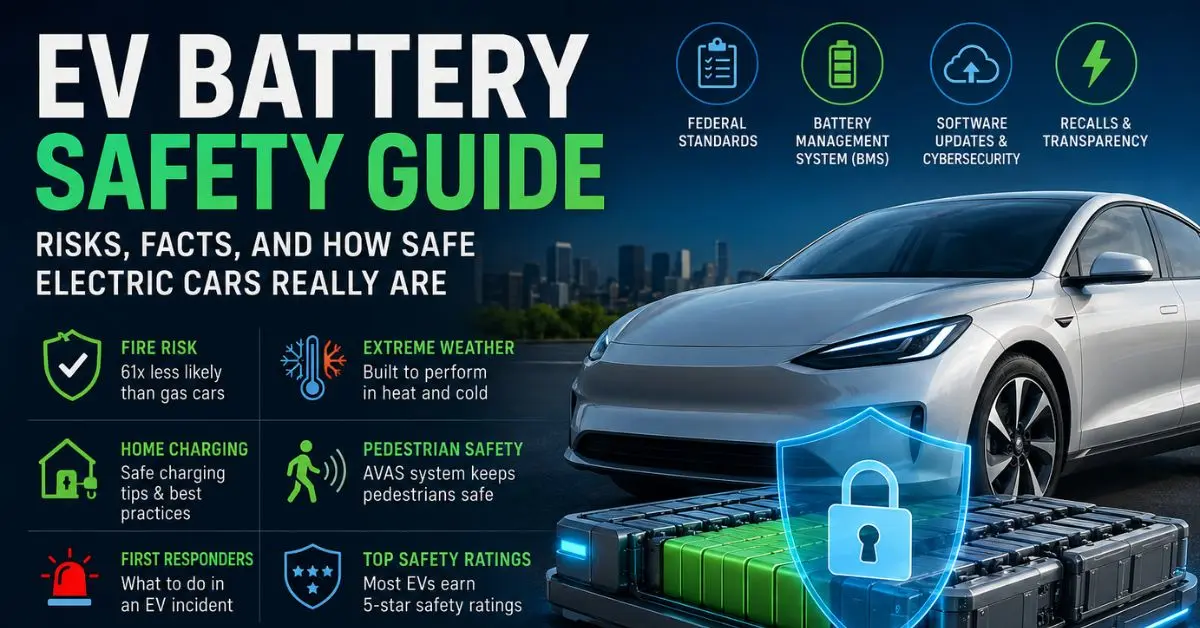
EV battery fires get significant media coverage, but the numbers tell a more balanced story. According to data from the National Transportation Safety Board, EVs catch fire at a significantly lower rate per 100,000 vehicles than gasoline cars.
That said, lithium-ion battery fires behave differently from conventional fires — they are harder to extinguish and can reignite. Understanding basic safety practices protects you and your family.
Key Safety Facts
- Thermal runaway — the rapid, self-sustaining overheating of battery cells — is the primary cause of EV battery fires. It is most often triggered by physical damage, manufacturing defects, or extreme overcharging.
- Modern EVs have multiple layers of protection against thermal runaway, including the BMS, physical cooling systems, and firewall structures.
- Do not park a damaged EV in an enclosed garage until it has been inspected by a certified technician.
- Water can be used to cool EV battery fires, but very large volumes are typically required.
The Future of EV Battery Technology
The EV battery industry is moving faster than almost any other technology sector. For US consumers, the next 5 years will bring meaningful improvements in range, charging speed, and cost.
Solid-State Batteries
Toyota has committed to launching solid-state battery vehicles by 2027–2028. Solid-state cells offer higher energy density, faster charging, and no flammable liquid electrolyte. Mass market availability in the US is still likely 2029–2032.
Silicon Anode Batteries
Several manufacturers are moving from graphite to silicon in the battery anode. Silicon can store roughly 10 times more lithium ions than graphite, which translates to significantly higher energy density. Amprius Technologies and others are already producing silicon anode batteries for specialized applications, with EV applications in development.
Sodium-Ion Batteries
CATL in China is already producing sodium-ion batteries for lower-cost EVs. Sodium is far more abundant than lithium, which would reduce battery costs significantly. US manufacturers are watching this space, and sodium-ion vehicles could reach the US market as early as 2026–2027.
Battery Cost Trajectory
Bloomberg NEF projects battery pack costs to fall below $80 per kWh by 2026 and below $60 per kWh by 2030. At $60/kWh, a 75 kWh battery pack would cost under $5,000 at the manufacturer level — bringing EV prices to parity with or below comparable gas vehicles.
EV Battery Recycling in the US
A fully electric transportation system requires a responsible end-of-life strategy for millions of battery packs. The US is building out this infrastructure now.
Most EV batteries that are retired from vehicles still retain 70–80% of their original capacity. Rather than immediate recycling, many are being repurposed as stationary energy storage — used in home solar systems, commercial energy storage, and utility-scale grid backup.
When batteries are fully recycled, the key materials recovered include lithium, cobalt, nickel, and manganese. Companies like Redwood Materials (founded by former Tesla CTO JB Straubel) are building large-scale US battery recycling operations to recover and reuse these materials domestically.
Summary
EV batteries are the heart of electric vehicles and the key to understanding EV ownership costs, range, and long-term value. Here are the key takeaways from this guide:
- Most US EVs use NMC or LFP lithium-ion batteries — LFP is more durable, NMC offers more range
- Real-world EV batteries typically last 8–15 years and retain 80–90% capacity at 100,000 miles with normal use
- The biggest threats to battery life are frequent DC fast charging, extreme heat, and consistently charging to 100%
- Level 2 home charging with an 80% daily limit is the optimal strategy for most US owners
- Federal law requires all US EVs to carry an 8-year / 100,000-mile battery warranty
- Solid-state batteries and falling costs will make EVs significantly more affordable by 2028–2030